Wednesday, May 27, 2015

John Nash, A 'Beautiful Mind', Killed in Car Crash

Nash Allegedly Failed to Use Seat belt Restraints


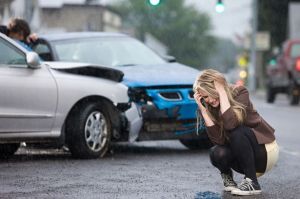
MONROE TOWNSHIP, NEW JERSEY - John Forbes Nash Jr, subject of the 2001 film "A Beautiful Mind", was killed in a car accident on the New Jersey Turnpike last Saturday. His wife Alicia, who was also in the vehicle, died at the scene.

Nash and his wife were traveling in a taxi cab when the car apparently lost control while attempting to pass another vehicle. The cab slammed into a guardrail and ejected Nash and his wife, neither of whom were wearing their seat belts. 

Nash, whose brilliance and struggles with with schizophrenia were chronicled in "A Beautiful Mind", made several groundbreaking discoveries in a wide variety of fields including mathematics, economics, and computer science. He received numerous awards and prizes, including the Nobel Memorial Prize in Economic Sciences in 1994.

The driver of the taxi cab will likely not be charged with any crimes. New Jersey law provides that drivers are not responsible for injuries to passengers in the back seat if they are not wearing a seat belt, unless the passenger is under the age of 18. 

Nash's death rocked both the academic and entertainment worlds, with tweets and statements from noteworthy individuals offering their condolences to the Nash family. 

Russel Crowe, who played Nash in "A Beautiful Mind", tweeted shortly after Nash's death: "Stunned... my heart goes out to John & Alicia & family. An amazing partnership. Beautiful minds, beautiful hearts."

If you have suffered an injury as a result of someone's negligence, you need to speak with an experienced personal injury attorney. Please call The Law Offices of Robert Paysinger, P.C. today at (303) 279-0221 for a free initial consultation. We help injured people - it's all we do!


Wednesday, January 28, 2015

Have Traffic Fatalities increased in Colorado?


Now that recreational and medical marijuana have been legal in Colorado for more than a year, how has that affected traffic fatalities?  Many prohibition advocates have warned that there would be a surge in impaired drivers, as well as deaths.  As many have noted, marijuana is difficult to test for, as its presence remains in the bloodstream for as long as 30 days, and is not a good measure of inebriation at the time of the accident.

It seems that the statistics for 2013 show that 5.7% of the fatalities involved a driver that tested positive for cannabis, according to DOT data.  This is in line with results for previous years.  The data for drivers testing positive for drugs overall was  approximately 16% from 2006 - 2010.

Statewide, preliminary data indicate that traffic fatalities have declined overall since 2002, when there were 743 deaths.  In 2014 there were 465 fatalities according to the Colorado Department of Transportation.  It is interesting to note that the number of suspected "impairment" (including alcohol) fatalities for 2014 was 152, or approximately one third.  This percentage is consistent with historical statistics.  There has been much conjecture about how the legalization of marijuana would impact DUI statistics in Colorado.  It appears that at this point the increase in impaired driving is not significant.

Colorado has implemented various safety campaigns to decrease impaired driving, and has established that a driver with a maximum of 5 nanograms of THC in the bloodstream is violating the law.  Drug recognition training programs for officers, which police believe is an extremely effective method to detect a driver who is high, have alsobeen implemented.

Although those who bend the data for or against marijuana are able to use the statistics to support the argument either way, it appears that the jury is still out on whether traffic fatalities will increase with the legalization of marijuana.

Source: Colorado Department of Transportation -  CDOT


Thursday, October 23, 2014

Airbag Recall Effort Gains Steam


The controversy surrounding the safety of airbags made by the Takata company continues to make news.  Regulators believe there could be almost 7.8 million of the devices which are defective, and are susceptible to exploding and expelling shrapnel which can injure the driver and passengers.

The difficulty lies in estimating the number of faulty airbags, and how many are installed in vehicles in the U.S.  On October 2, Hien Tran was in an accident in Florida, when the airbag deployed and she was wounded by small pieces of material which pierced her neck. She died four days later. This was the third death associated with the product.
 
The devices are believed to be more unsafe in hot and humid weather.  Most of the affected vehicles are older cars that may have been on the road since 2000.  Some auto makers are saying that the cars aren't subject to a formal recall, but will be repaired in hot weather states.  Currently, the US attorneys office in Manhattan is investigating whether the Takata company made misleading statements about the safety of the airbags. In June the company agreed to repair the faulty devices in states where there was weather was warm and humid, but some regulators are calling for a formal recall.  The defective bags were manufactured over the time span from 2000 until 2008, and there have been six instances where they exploded.
   
Toyota has recalled over 200,000 vehicles to repair the airbags, and has warned people not to drive the cars until they repaired.  During a year where driver safety has been compromised by faulty ignition switches, this is not welcome news!
 
If you have suffered an injury as a result of someone's negligence, you need to speak with an experienced personal injury attorney. Please call The Law Offices of Robert Paysinger, P.C. today at (303) 279-0221 for a free initial consultation. We help injured people - it's all we do!

Source: Takata’s Airbag Recall a Result of Converging Forces

Wednesday, September 3, 2014

Nathan Dunlap - The Capital Punishment Controversy


As CNN examines the American capital punishment system in the new “Death Row Series”, the controversy surrounding Colorado Governor John Hickenlooper’s decision last year to spare the life of Nathan Dunlap, a convicted killer, has continued to attract attention.  Featured in the series, Dunlap was convicted of murdering four people and severely injuring a fifth in a Chuck E. Cheese restaurant in 1993, was sentenced to death two years later, with an execution date of August 2013.  After 20 years, the decision came before the governor, with claims that the trial attorneys did not represent him properly as well as a diagnosis of severe bipolar disorder, and Hickenlooper granted a temporary reprieve.

An extremely popular official, Hickenlooper is now seen as vulnerable in his re-election bid this November. One of his opponents, Tom Tancredo has vowed to execute Dunlap should he win the election.  Another, Bob Beauprez, suggests that the governor is showing an ”unwillingness to make the tough call.”

The temporary reprieve has generated strong public outcry on the part of some of the victim’s families.  The problem with a temporary reprieve is that no one knows when it will be lifted.   “The justice system is broken,” says Bob Crowell,whose 17 year old daughter was among the victims.  Others are less certain of what the outcome should be.  Jody McNally Damore, mother of Colleen O’Connor, also a victim says, “putting him to death makes me queasy.  I don’t know why, but you have to wonder why he got so many years of appeals”.  

The governor consulted with prosecutors, defense attorneys as well as the victim’s families. In a statement after granting the temporary reprieve, which could be undone by a later governor, said that he “felt centered after making the decision – that this was respectful of the people of Colorado and their right to come to their own conclusions and be a part of that process.”

Hickenlooper intended to initiate a conversation with the people of Colorado about the death penalty, of which he has indicated his opposition.  However, some of the criticism related to the reprieve suggests that the governor has usurped the role of the jury and courts, as well as the wishes of the victim’s families.
 
The Colorado Constitution provides the power to grant clemency, to consider information that was not public about the case at the time of the trial.  It is probable that Dunlap’s mental illness, which was undiagnosed at the time, and the sworn statements of three of the jurors that they would not have voted for a death sentence had they known was considered.  Mesa County District Attorney Pete Hautzinger differs with this view, “The courts have made it abundantly clear this is a constitutional penalty to impose.”   The governor has suggested that if he is not re-elected, he could grant clemency to Dunlap, which would release him from the prison system into the general population.

 Some say that the fate of Nathan Dunlap is in the hands of the Colorado voters. The death penalty is the center of another case pending in Colorado, the trial of James Holmes, the Aurora theater shooter whose trial is slated to begin in November. Colorado is at the center of the debate on capital punishment, with approximately 47% of the population in favor of repealing the death penalty, in favor of life without parole, and 47% would not.  Where do you stand?


The Denver Post
CNN.com

Wednesday, August 20, 2014

What to Do if You Are In a Car Accident


The Denver Post reports that more than 2.3 million drivers were treated for injuries from a motor vehicle accident in 2009. Although it seems odd to think of preparing yourself for a car accident, there are a few things you can do to make it easier to deal with a crash if one should occur.

1) If you are in an automobile accident, you should first secure your own safety - i.e. move to a safe location. However, do not leave the scene.

2) Next, call the police.  Too often, people are hesitant to call the police.  This can create problems if you are involved in a personal injury case, as the police are theoretically an independent observers and investigators.The accident report is an important document in the claim.

3) Record responding law enforcement officials names, as well as city and county information.

4) Get the contact information of the other driver and witnesses. If there are no independent witnesses, the police will conduct an investigation and prepare a report of the

5) Take photos of the accident scene. Use your camera phone to show the position of the vehicles and skid marks, as well as details of the damage.

8) Do not discuss fault with anyone. When a person discusses fault with the other driver, witnesses or  police, it can generally create more problems.  If you believe the accident was your fault and you tell the other driver or the police, it can be crippling to a potential case if it is later determined that the accident was not your fault.

7) Do not give a statement to the other driver's insurance company.  You are under no obligation to do so.  However you must cooperate with your insurance company.  Despite commercials to the contrary, insurance companies make money by paying out as little as they can when they receive a claim.

8) Go to the doctor or emergency room as soon as possible if you have any pain.  Delaying treatment if you are hurt may worsen your condition, as well as make it appear that you did not sustain any injuries in the accident.  Experts also suggest keeping a record of basic medications and allergies with you to assist doctors in the event you are unable to give them the information.

9) Don't miss doctor's appointments or physical therapy visits.  If you do miss an appointment, reschedule as soon as possible. If you miss appointments, you are telling the insurance company your injury is not significant.

If you have been injured in an accident, you need to speak to an experienced attorney.  Call The Law Office of Robert Paysinger, P.C. at 303-279-0221 or visit www.paysingerlaw.com.

Source: www.denverpost.com and The Injury Resource Guide.

Thursday, August 14, 2014

Dangerous Driving: Colorado Ranks 9th for Most Uninsured Drivers


A new report produced by the Insurance Research Council indicates that Colorado has once again cracked the top 10 in terms of states with the most uninsured drivers.

The rate of uninsured drivers has been steadily increasing since 2006, three years after Colorado switched from a no-fault insurance system to a traditional tort liability system, which insurance companies argued at the time would lower premiums and decrease the overall number of uninsured drivers.

While premiums and uninsured drivers both decreased initially, the report indicates that the number of uninsured drivers is now steadily on the rise. With approximately 16% of drivers in Colorado illegally using their vehicles without insurance, Colorado ranks 9th highest out of the 50 states. This translates to an estimated 594,000 uninsured drivers in the state.

Adding to this confusing trend is the fact that Colorado's insurance premiums are lower than the national average, with costs of gasoline and vehicle repairs also being similarly low when compared to the rest of the country.

Lurking behind these statistics and figures appears to be a strong correlation between the rise in uninsured drivers and the rise in hit and run accidents in the Denver metro area. The sharp increase in hit and runs has been a primary concern of law enforcement and safety officials in the past few years.

These trends are concerning, because they indicate that Coloradans are choosing to be uninsured despite relatively low costs and extremely high risks.

One way to protect yourself from being stuck with high medical bills and costs from an accident with an uninsured motorist is to purchase UM/UIM (uninsured/underinsured motorist) coverage with your insurance company, which is generally available for a minimal cost addition each month.

If you are injured by no fault of your own in a hit and run accident, or by an uninsured motorist, you need to speak with an experienced personal injury attorney. Call The Law Offices of Robert Paysinger, P.C. today at (303) 279-0221  for a free initial consultation. We help injured people - it's all we do!

Source: Premiums Fall, Yet Motorists Still Choose to be Uninsured

Wednesday, August 6, 2014

Driverless Cars Are on the Horizon


The shift to driverless cars is on!  Scholars and researchers are estimating autonomous cars will make up 75 percent of vehicles on the road by 2040.  This will have a dramatic impact on many areas of our economy. 
  
Autonomous cars will affect infrastructure as the cars would have to communicate with the highway or street as well as with other cars to determine traffic and weather conditions.  Vehicles would be able to travel faster as alerts could be exchanged to regarding accidents or available parking places.  It would be possible to avoid accidents with information about where other vehicles are.
  
Another major change would affect transportation and mobility for many people who are currently unable to drive.  This would have a huge impact on the young, the elderly, and the disabled.  In fact, the appeal of using the commuting time to surf the internet or talk on the phone is a major attraction to millennials.
  
Many of the features which will be found in driverless cars will be available in the near future.  Driver assist systems including active cruise control, lane-keep assist are becoming more common in vehicles.   Volvo is introducing two new systems which will be offered in its’ 2016 XC90:  run-off road protection and auto brake at intersections.  

The run-off road feature detects when a car leaves the road and tightens the front safety belts to keep occupants cinched in their seats.  It also added energy absorbing cushioning between the seat and frame to help alleviate the occurrence of spinal injuries.  To keep drivers on the pavement, Volvo will add a Lane Keeping Aid, which applies extra steering torque when a vehicle unintentionally travels outside the lane.  Statistics from Volvo indicate that half of all traffic fatalities are due to road departure accidents, when a vehicle veers off the road.   Volvo has long been known for safety, so it is not surprising that they are at the forefront of new safety technology.
  
When it comes to research on driverless cars Google is way ahead of the competition.  Initially, the driverless car research was done on the Toyota Prius, and Google has a fleet of them around its California campus, and has tested them over approximately 300,000 miles.  It has since built its’ own version of the vehicle without a steering wheel.  Although the technology is advancing, many drivers are hesitant to relinquish control.   People may become accustomed to these new cars a little at a time. 

If you are injured in an auto accident by no fault of your own, you need to speak with an experienced personal injury attorney. Call The Law Offices of Robert Paysinger, P.C. at (303) 279-0221 today for a free initial consultation. We help injured people - it's all we do!